
Frequently Asked Questions
Hopefully the information on this page covers anything we might have missed elsewhere on our website.
If you can’t find what you’re looking for, feel free to Contact Us.
The Materials We Use
-
Architectural films are self-adhesive vinyl products that allow you to completely cover and refinish objects or surfaces in a faster, more economic, and more eco-friendly fashion compared to entirely replacing them.
Architectural films come in a wide range of designs such as wood, stone, linens, metals, and more that provide a clean, high-end look. Abstract, matte and colored finishes convert surfaces including metal, wood and glass to reflect an entirely new design.
Here at RM wraps, we are certified in the sales and installation of 3M Di-Noc, the largest and most widely-used brand of architectural films in the US.
-
Architectural wrap vinyls can adhere to smooth, solid, non-porous substrates including doors, interior walls, reception desks, cabinetry, and tables.
-
Yes. Architectural films are specifically engineered for long-term durability and holding up to day-to-day contact in commercial building applications. They are 2-3 times thicker than your typical wrapping vinyls. We choose to work with 3M Di-Noc in particular, because it boasts an industry-leading 10 year warranty on the material once applied.
-
Most Architectural Films are designed and rated for interior use only. Specially-formulated patterns for outdoor use are available depending on the brand (in the 3M Di-Noc catalog, these are the EXR patterns).
RM wraps focuses on interior application installations. If you are looking for an installer for an outdoor application, we recommend searching for an installer in your local area.
-
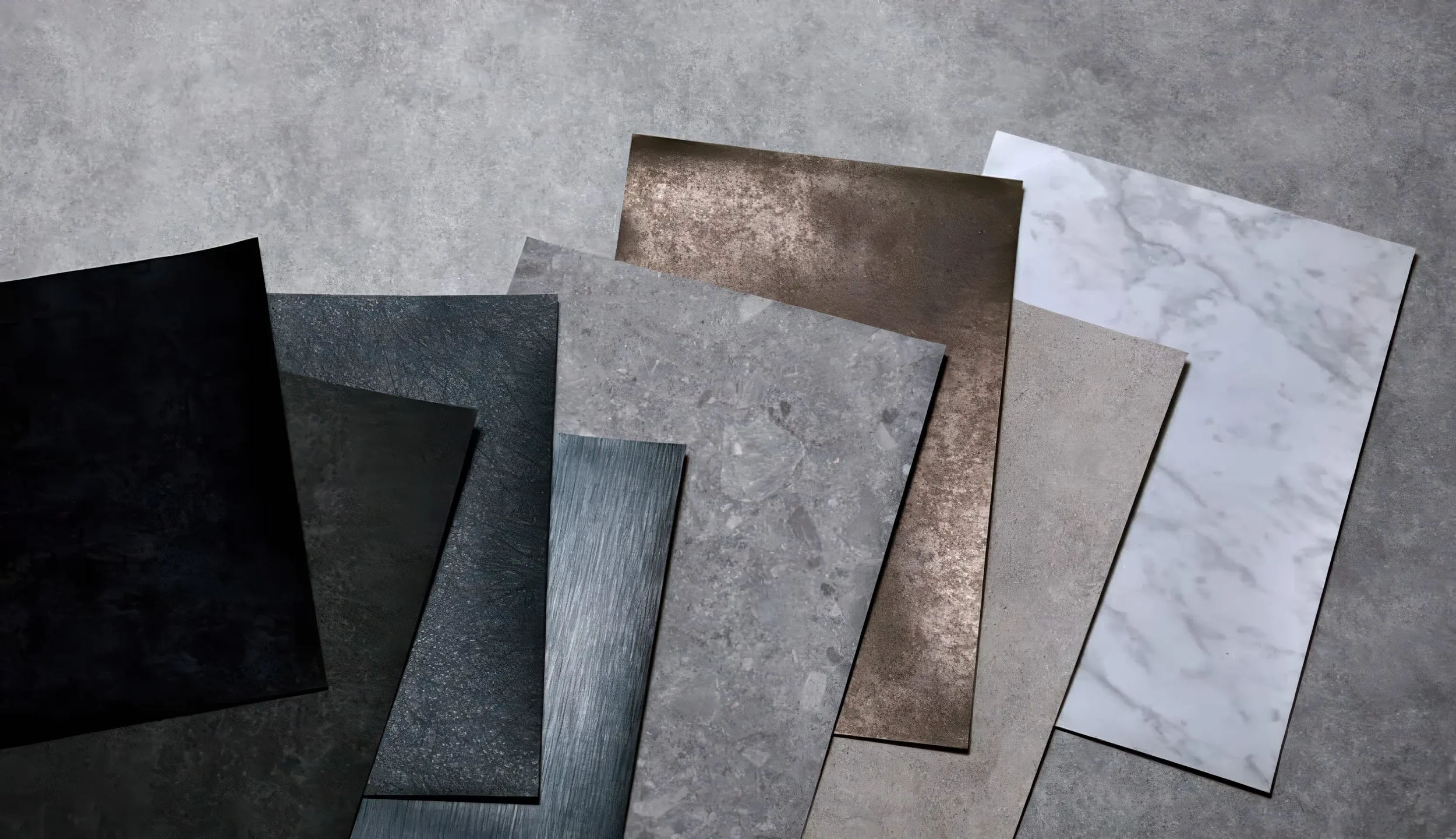
You can order samples of any currently-active 3M Di-Noc pattern over on our sales-dedicated website www.rmwrapsstore.com.
3M Di-Noc samples come either 5.5” x 8” or 8” x 10”, depending on the specific pattern.
-
The 3M Di-Noc catalog boasts approximately 900 unique patterns; keeping them all readily in stock proved to be difficult. To minimize patterns being out of stock and cut down on waste, 3M decided to focus on stocking the 190 most popular patterns in the catalog here in the US. The rest are still available, but must be import-ordered out of the factory in Japan.
There are 2 main aspects to keep in mind when viewing Japan-Import patterns: 1.) patterns in Japan are only available in full 50-meter rolls; if you project needs 1.5 rolls you have to order 2, so there is more waste. And 2.) Import orders out of Japan take a couple more weeks to arrive than the patterns that are available in the U.S. For these reasons, smaller projects and/or projects that need an especially-quick turn-around, we recommend limiting your sampling/pattern choice to patterns in the Quick-Ship section of our website.
-
Di-Noc wood grains come in 4 main series - Wood Grain (WG), Fine Wood (FW), Dry Wood (DW/MT), and Premium Wood (PW/MT). They ascend in visual fidelity as well as feel to the touch in the order WG -> FW -> DW/MT -> PW/MT. This is reflected in the prices of the material, with WG being the most economical and PW/MT being the most premium.
For a more detailed walkthrough/visual presentation, watch this video.
-
Maintenance is simple: use a soft cloth with warm water and a mild, non-abrasive detergent. Avoid harsh chemicals or bleach, and do not use abrasive scrubbing pads, as these can damage the protective top layer of the film.
Project Timing & Costs
-
There are a lot of variables that effect the costs of the projects we install - things like pattern choice, size of the project, existing surface condition, how much prep work is done before we arrive, even things like location of your project and time of year. We also charge different rates depending on the intricacy of the project, and if swing/graveyard work is required.
Simply put, there’s too many things to take into account for us to be able to give an average cost here on our FAQ page, but we’re happy to give you a quote if you head to our Contact Us page and give us some details of what you’re looking to get done.
-
This is another one that’s tough to nail down for your specific project without more details, but in general:
Material can take 1 to 3 weeks to arrive from when it is ordered, depending on pattern choice. We usually wait to travel to the job site until we confirm material has been delivered.
Installation can take a couple days to a couple weeks, depending on several factors including size of the project, existing surface condition and how much prep work is done before we arrive. Most of the projects in our blogs state how many days it took for installation - that can help give you a point of reference.
-
Yes, with a couple of asteriks.
An initial consultation and estimation of material is still required. This includes you receiving samples and making a pattern choice.
For projects that need to be completed as quickly as possible, pattern choice will be limited. This is because not all Di-Noc patterns are stocked in the U.S., and 3M does not offer expedited shipping options from Japan (see the section above - “What is Quick-Ship vs. Japan-Import?”).
Our ability to travel quickly will still hinge on waiting to confirm receipt of the material at the project location.
We can bring one than one installer to get the project done more quickly, but that does put more emphasis on the preparation done before we arrive (see the Project Preparation questions below).
-
Yes, we can install your project around your scheduling, including overnight (graveyard). If your project requires this, please let us know during consultation before your installation is scheduled.
Project Preparation
-
Every project is different so it’s hard for us to adequately summarize things on an F.A.Q page, but in general the cleaner and more-repaired your wrap subjects can be on the day we arrive to start installing, the better. For simpler subjects like walls, this simply means a clean and accessible work environment. For doors, a significant amount of time and labor-cost can be saved if the hardware (handles, locks, etc.) is removed prior to our arrival. For aviation wraps, as much removal and disassembly of wrap subjects from the plane as possible is highly beneficial to our wrapping process, and thus your total cost.
We will have more specific recommendations for your specific project when we connect with you during the concultation/planning stage.
If your surfaces are in particularly rough shape, here’s some general guidelines.
Dented, Gouged, or Damaged Substrates:
Bondo and filler patchwork is used to fill deep scratches, gouges, dents, and chipped corners on doors, cabinetry, tables, and elevator interiors, restoring a level surface before wrapping.
Tight Door Margins & Rubbing Edges:
Door edges may need to be shaved, planed, and/or adjusted to establish proper operational gaps, preventing the wrapped film from rubbing against the door jambs or peeling during regular use.
Uneven, Textured, or Peeling Surfaces:
Substrates experiencing this should be sanded down to eliminate surface imperfections, rough wood grains, old flaky finishes, and uneven transitions. They then should be properly sealed.
Porous, Chalky, or Unsealed Substrates:
Zinsser Gardz sealer/primer should be applied to porous wood, drywall patches, or repaired surfaces to lock down drywall paper, seal porous substrates, and create a solid, non-porous foundation for optimal 3M DI-NOC adhesion.
-
No, we do not handle structural teardown, mechanical removal, or the uninstallation of built-in aircraft interior walls, complex monuments, and fixed cabinetry.
If certified aviation de-installation or structural disassembly is required by FAA/A&P guidelines or client preference, an authorized maintenance technician, hangar crew, or interior teardown specialist must handle the removal prior to wrap installation.
-
When a subject cannot be removed, we will do our best to wrap directly in place using edge-tucking and seam-matching techniques. If a piece cannot be wrapped in-place, we will bring it to your attention as soon as possible (either during the consultation stage if we see it in your photos/video, or while we are on site during installation).
Want To Get Started On A Project?
Let’s get the ball rolling.